You want the iconic hut-to-hut experience – the early starts, the rifugio dinners, the views that earn their reputation, but not the rigid schedule of a group tour or the months of admin that come with planning everything yourself. Dolomites self-guided hiking sits right in the middle: total trail independence backed by professional coordination.
We’ve been organising self-guided treks in these mountains for years, working closely with certified Italian mountain guides and the rifugio owners who make multi-day hiking possible. That combination gives us a clear picture of where this format genuinely shines…and where it has real limits.
Total Hiking Freedom: Why Your Schedule Belongs to You
Guided group tours must optimise for the collective pace. That means faster hikers feel held back, slower hikers feel constant pressure, and everyone compromises. Choosing to hike independently removes that dynamic entirely. Your day belongs to you, and your only responsibility is to the trail and your own curiosity.
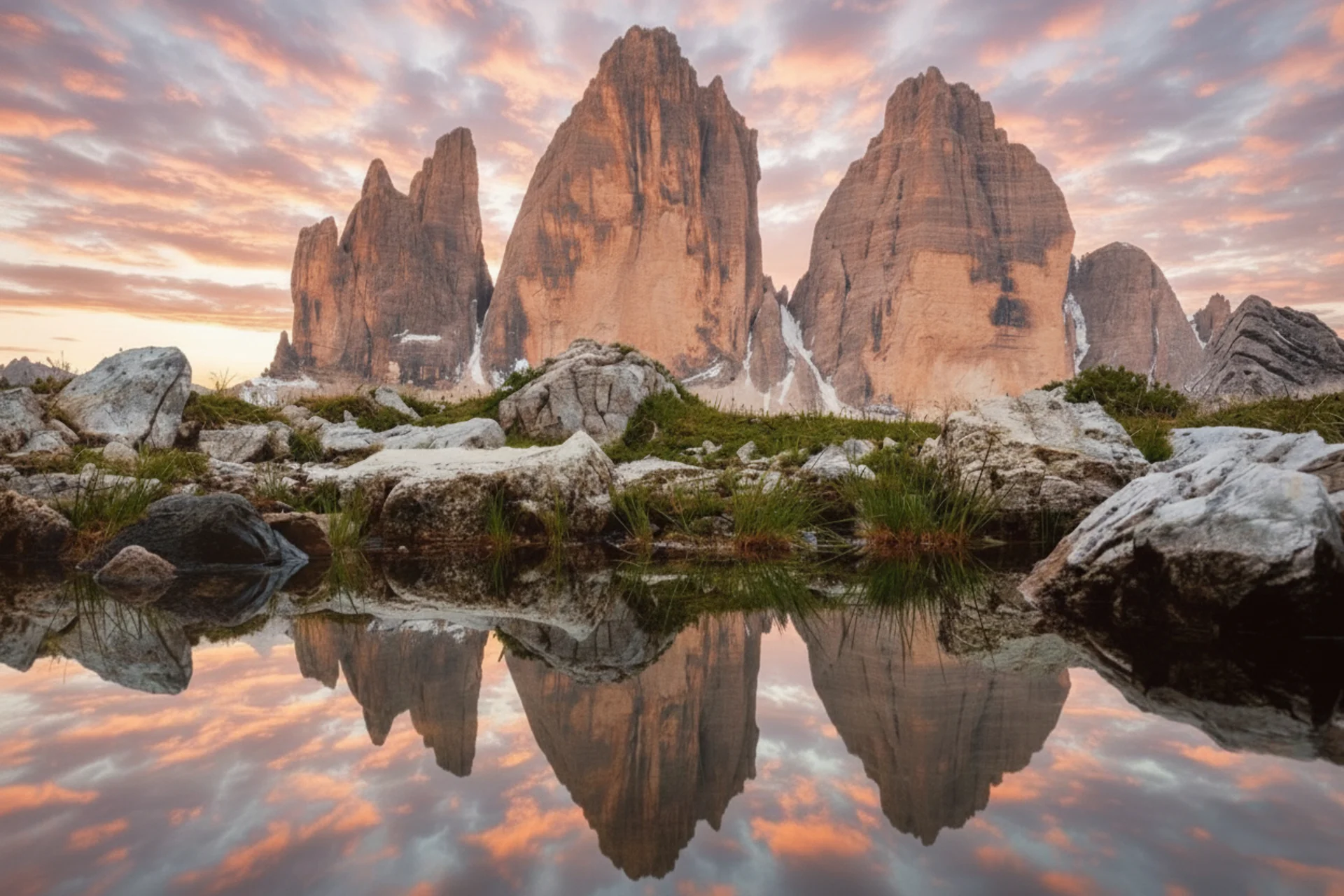
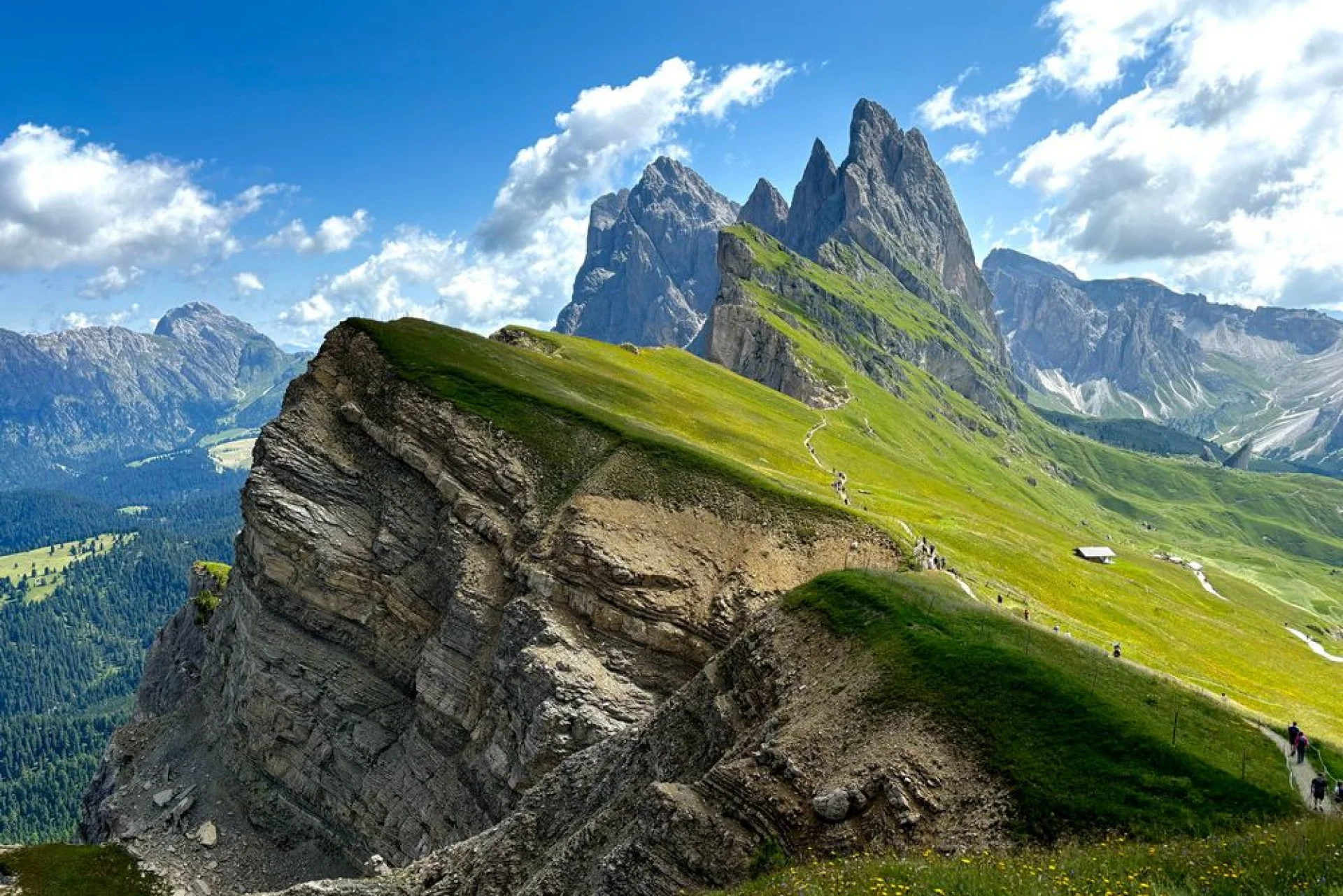
That shift changes how you experience the mountains. You can embrace what we call the rifugio morning – lingering over a second espresso on a sun-warmed terrace while the light spreads across the Puez plateau, or sitting quietly on the steps of Rifugio Locatelli watching the Tre Cime towers catch the early colour. If you want to stop for twenty minutes to photograph the ridgeline at Seceda, you can do so without guilt. Lunch is your call too: a quick energy bar on a high pass, or a long meal of Ladin origin at a malga with your boots drying on the bench outside.
Practically, hiking freedom gives you a wide arrival window. A standard hut-to-hut stretch requires around five hours of active walking. Starting at 8:30 AM with frequent breaks still puts you at your next rifugio by 4:00 PM with plenty of time for a cold beer on the terrace. Use signposted CAI trail times as planning inputs rather than targets, and always depart early enough to clear exposed ridges before the afternoon weather window closes.
Managing your own tempo means the adventure becomes personal rather than prescribed. You gain the luxury of listening to your body, of stopping when something is beautiful, and of moving fast when something feels easy. That’s what separates a mountain trek from a mountain tour.
Optional Social Connection: The Alone-But-Not-Lonely Advantage
One of the most common concerns about hiking independently is the fear of isolation. You want quiet autonomy by day without spending every evening eating alone. The rifugio culture answers that concern better than most hikers expect – it offers optional social connection rather than enforced togetherness.
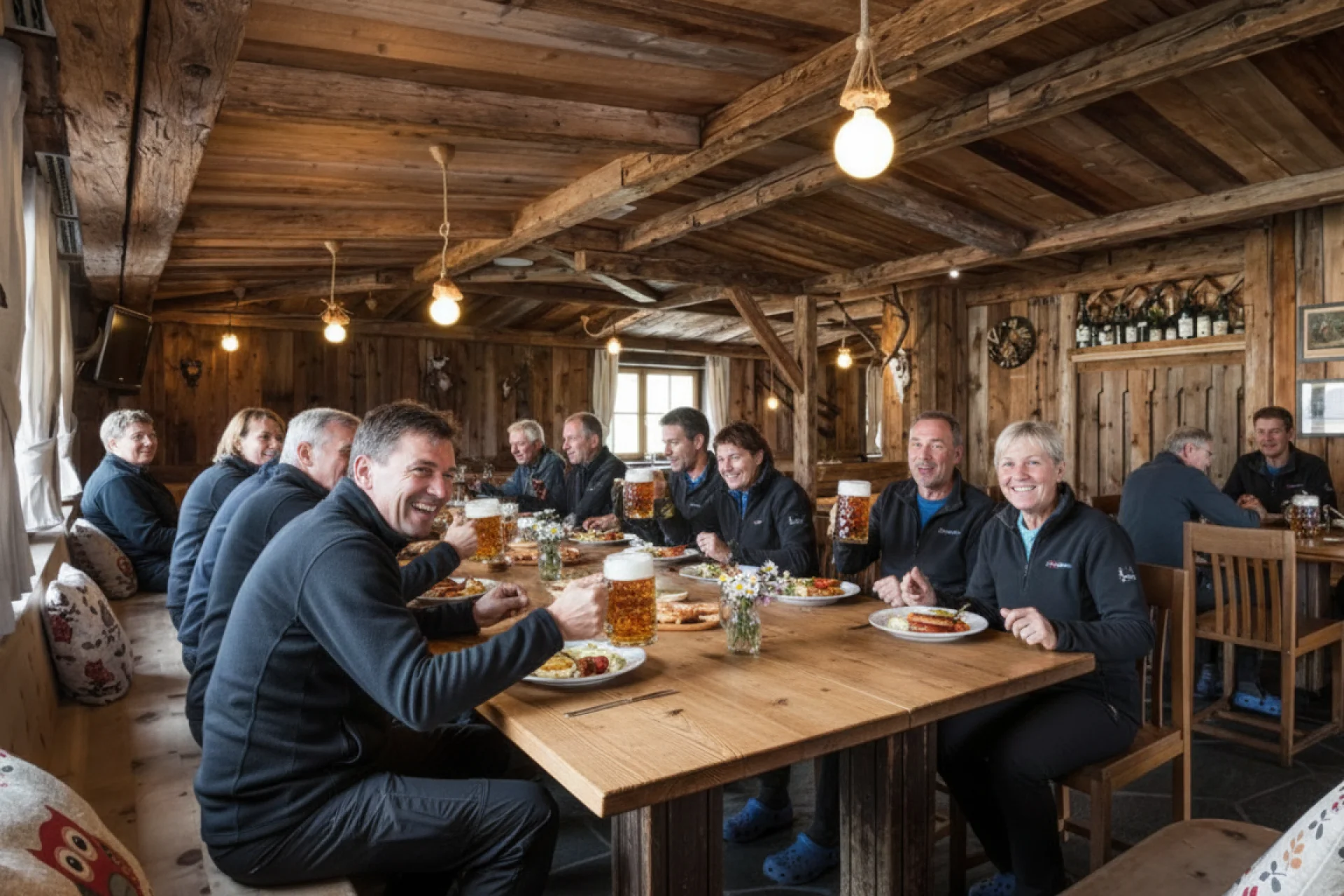
Communal dinners are central to the hut experience. You’ll sit at long wooden tables with fellow hikers who just navigated the same passes, sharing the same tired legs and the same appetite. That’s an instant conversation starter you can engage with on your own terms. On popular routes, you’ll often see the same faces across different huts over several days, a loosely knit trail bubble that provides a reassuring sense of connection without any group obligation.
Dormitory life has its own rhythm. Expect occasional snoring and early-morning rustling; both come with the authentic experience. Earplugs and a sleep mask resolve most of it. The honest version: if you need guaranteed silence and a private room every night, adjust your budget for private doubles and book them well ahead. They exist but fill fast.
The real advantage here is choice. You decide how social each evening gets. That’s something a group tour can’t offer.
OUR SELF-GUIDED TOURSThe Rifugio Advantage: Why These Mountains Support Your Independence
The Dolomites are built for hut-to-hut trekking in a way that very few mountain ranges are. In most wilderness regions, genuine independence means a 20kg pack and a tent. Here, the rifugio network removes those physical burdens entirely, which opens self-guided trekking to a much wider range of hikers.
Three things this infrastructure changes for independent walkers:
- Pack weight: Staffed huts with half-board meals drop your load from 18-20kg to a manageable 8-12kg. You carry clothing, navigation tools, and safety gear – not a kitchen!
- Bailout options: High hut density means genuine escape routes during sudden afternoon thunderstorms or when elevation gain proves harder than expected. You’re rarely more than a few hours from shelter.
- Cultural immersion: Sunrise espresso on a panoramic terrace. Goulash and local wine after a long day. Conversation with hut keepers whose families have run the same ridge-top rifugio for three generations.


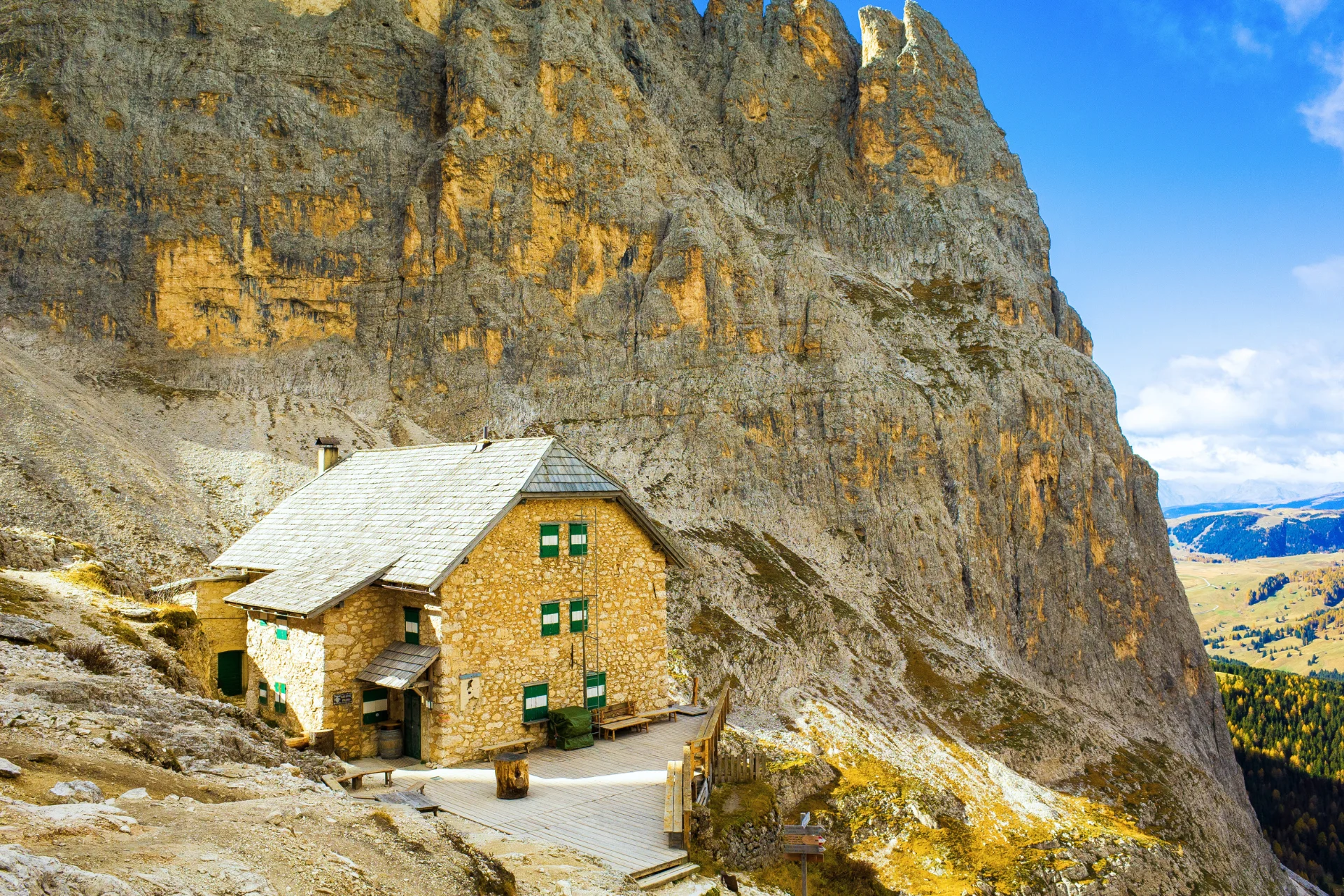
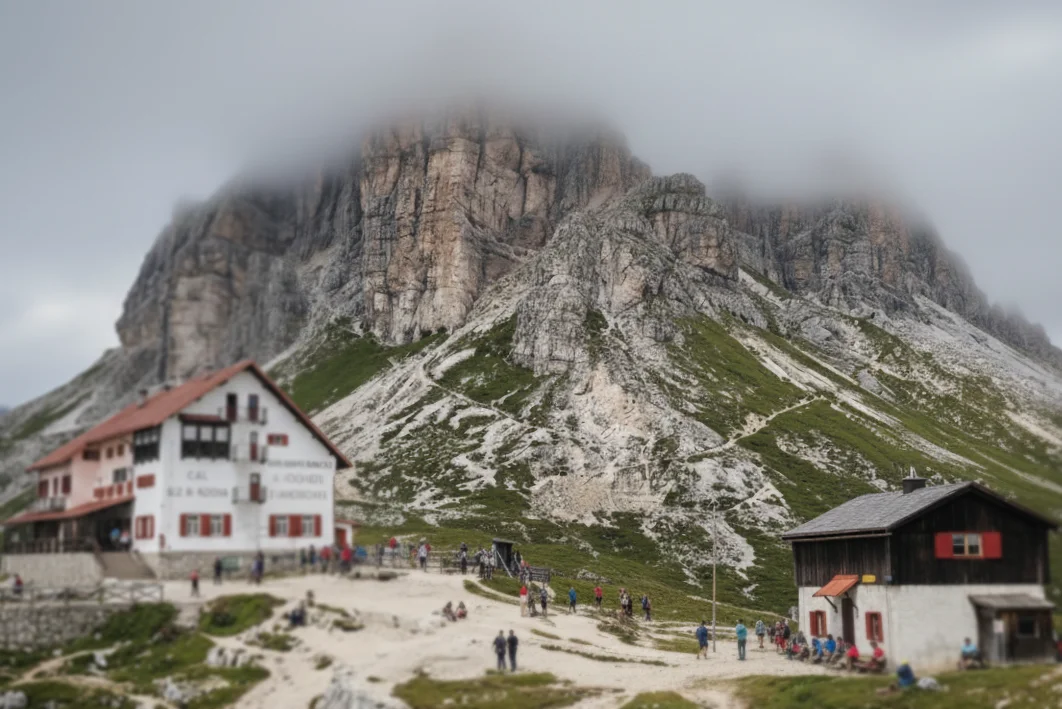
The rustic reality is worth mentioning honestly. Dormitories are the norm; private rooms are limited and often reserved months in advance on busy routes. Showers cost €3-10 and run on tokens. Charging outlets are sometimes scarce. Bathrooms are shared. None of this is surprising once you understand that these huts exist at 2,000-2,800 metres, staffed seasonally and often supplied by helicopter.
For a full picture of what to expect, from meal times to dormitory etiquette to shower tokens, our guide to Dolomite rifugios covers every detail.
The system preserves deep wilderness immersion while removing the survival logistics of traditional backpacking. That’s why self-guided hiking is more practical in the Dolomites than almost anywhere else in the Alps.
What You’re Actually Paying For: Self-Guided vs Fully DIY?
The Self-Guided Option
Is a supported self-guided Dolomites hiking tour worth the cost? It’s a fair question. The honest answer is that you’re paying to eliminate booking complexity – and there’s a lot of it.
There’s no centralised reservation system for rifugi. You’re coordinating ten or more independent, family-run mountain huts, most of which communicate via email in Italian or German, require international wire transfers for deposits, and don’t have the bandwidth to answer detailed route questions. A professional operator handles that coordination using established relationships and secures confirmations that other travellers can’t get.
This, with the knowledge of what actually works, what’s possible to hike, and providing detailed itineraries to make your hike seamless, enjoyable, and safe.
If self-guided sounds right for you, our self-guided tours give you full trail independence with a solid planned itinerary, local phone support, and confirmed rifugio bookings.
What a good package covers:
- Confirmed rifugio bookings with half-board included
- Verified GPX tracks, hardcopy map, daily route notes, and suggestions
- Luggage storage, transfers, and valley shuttles where the route requires them
- A local phone support line for weather decisions and rerouting
What it doesn’t cover — and what you should budget separately:
- Lunches at mountain huts, packed lunches, and hiking snacks: €15-25 per day (pasta, canederli, goulash)
- Shower tokens and drinks at huts: €10-20per day
- Optional chairlifts: €8-30 per ride
- Buffer for unexpected transfers or an extra pre/post-trip night: €150
Fully DIY
Fully DIY planning is cheaper in raw euros. It costs 20-40+ hours of research, carries a meaningful risk of booking failure on high-demand routes, and leaves you without advocacy when conditions change. Popular huts on the Alta Via 1 often fill 6 months (or more) in advance. A supported trip buys you peace of mind and time – which, for most people, is the real return on investment.
If you’re weighing your options, our self-guided hiking packages include all rifugio coordination, route documentation, and local support – so you arrive in the Dolomites ready to walk, not ready to manage spreadsheets.
Planning Tip: While this article covers the experience of being on the trail, successful trekking starts months before you arrive. So, if you still want a DIY option: for a timeline on when to contact huts, how to handle deposits, and how to build your itinerary, see our companion guide: How to Plan Your Dolomites Hiking Tour: A 5-Step Guide.
Safety as Preparation: The Difference Between Independent and Reckless
The most common worry for independent trekkers is the “what if” scenario. What if the weather turns? What if I get lost? What if I twist my ankle on a remote trail? These are valid questions, and they deserve honest answers.
Self-guided hiking in the Dolomites is not reckless. But it does require sound mountain judgment. The key distinction is between being unguided and being unsupported — and a good operator ensures you’re never truly the latter.
Three preparation fundamentals matter most:
Route selection
Choose trails that genuinely match your experience level. The Italian Alpine Club grades trails from T (Tourist) through E (Excursionist) to EEA (Expert with Alpine Equipment). If you lack via ferrata training and exposure experience, stick to T and E-grade routes. EE and EEA trails are not appropriate for independent hiking without technical skills.
Navigation redundancy
Always carry a 1:25,000 paper map, an offline app (Komoot or OutdoorActive works well), and downloaded GPX tracks. Cairns and trail markers can disappear or be easily missed in poor visibility. Redundancy isn’t overkill – it’s smart, and standard practice.
The 2 PM rule
Plan to be off exposed high ridges or at your destination hut by early afternoon. Afternoon thunderstorms are a constant in the Dolomites summer, even when the morning forecast looks clear. We’ve watched the sky flip from blue to black in under thirty minutes on the Lagazuoi plateau. Start early. Move with purpose.
If you’re genuinely uncertain about your navigation skills or feel panic on exposed terrain, a guided small-group tour is the smarter choice. A certified guide builds your skills while managing the inherent risks of high-altitude terrain – and that’s not a limitation; it’s an investment.
For mountain emergencies, the European emergency number is 112.


Weather and Flexibility: Your Most Important Gear
Mountain weather in the Dolomites doesn’t read the forecasts. A clear valley morning can quickly change into a sleet-driven storm or even unseasonal snow by 2:00 PM. We’ve seen this happen in June on Marmolada and in late August on the Puez plateau. You adapt, or you suffer!
Self-guided hiking handles this reality better than group travel because you make your own calls. No consensus needed. You can start at dawn to maximise your weather window, pull up short at a rifugio when the sky looks wrong, take a break, prepare, and decide when to push on.
That said, there’s a genuine flip side. A professional local guide reads mountain weather with years of on-the-ground pattern recognition; they’ve watched specific ridges, specific passes, and specific storm directions hundreds of times. When conditions turn ambiguous, they make the call without hesitation, and the group moves as one. For hikers who’d rather have that judgment sitting next to them at breakfast than exercise their own, a guided tour removes the mental load of weather decisions entirely.
A firm rule: if thunderstorms are forecast, do not leave the rifugio – no summit or schedule is worth being on an exposed ridge when lightning arrives.
What makes that flexibility real, not theoretical:
- Waterproof jacket and trousers in your pack
- Route notes (where possible) that identify lower-elevation variants, valley exits, and lift shortcuts for each day
- The willingness to book an extra night at a rifugio and wait out a front (again, where/when possible)
The mountains set the schedule. Your job is to stay informed, stay flexible, and make conservative calls when the situation calls for them.
The Planning Reality: Why Coordinating Rifugios Is a Second Job
Why spend forty hours on spreadsheets before lacing up your boots? The dream of a self-planned Dolomites hut-to-hut trek often collides with a practical reality that catches people off guard: there are thousands of kilometers of trails, and there is no centralised booking system for rifugi.
When you try DIY, several things can unravel:
- One sold-out hut on day four breaks your entire ten-day chain
- You end up building a route around bed availability rather than the best scenery and trail connections
- Deposit requests arrive in Italian or German, with wire transfer requirements and unclear cancellation policies (usually none)
- A mid-trek weather event, a minor accident, or a sudden illness means dealing with it on your own.
A professionally supported trip removes that friction. Our locally based team at Dolomites Active Tours plan the routes, manage the hut bookings, and help you handle situations when things don’t go as planned. You still do the work of hiking, daily navigating, and pacing yourself on the trail. You’re just not carrying the admin weight alongside your rucksack.
For a broader overview of multi-day trail planning – routes, gear, and what to expect on the trail, the backpacking guide is a useful companion read. And if you’re ready to hand over the coordination, then explore our self-guided hiking packages.

When Self-Guided Isn’t the Right Move
I’ll be straightforward about this: self-guided hiking isn’t the right format for everyone, and pretending otherwise wouldn’t be honest.
The Dolomites are a genuinely Alpine environment. Routes change character quickly in poor weather. Some sections involve exposed ridges with significant drops, fixed cables, and terrain that reads differently in person than it does in a trail description. Sound mountain judgment isn’t something you can substitute with a good GPX track.
A few honest indicators that guided is the smarter choice:
- This is your first experience hiking at altitude, or if you are new to alpine environments entirely
- You prefer a professional to make the critical calls when a weather window closes faster than expected
- You feel significant anxiety on exposed ridges, are not comfortable with heights, suffer vertigo, or are unsure how you’d respond to sudden visibility loss in the morning calm.
- You want to do technical terrain: via ferrata routes, glacier crossings, EEA-graded trails – without prior training
- You like or need the social aspect of meeting and spending time with new people
- If you want cultural, environmental, historical accounts, and other information about the wildlife and flora, then a guide is a great option. Their 3 years of training cover more than just technical skills and safety!
If you’re new to alpine hiking and working out whether the terrain is right for you, the beginner’s hiking guide is the right starting point before committing to a format.
If you’d rather hike with certified Italian mountain guides who handle navigation, safety calls, and group pacing, our private or small-group guided tours are built for exactly that.
Knowing which suits you is the first real step toward planning a trip that actually works.
The Sweet Spot Is Real – If You’re Honest About What You Need
Self-guided hiking in the Dolomites delivers something genuinely difficult to find elsewhere: total trail independence inside one of the world’s best mountain infrastructures. The rifugio network carries your weight, feeds you well, and puts shelter within reach when the sky turns. The format works because these mountains were built for it.
And if guided is the right call – first alpine experience, technical terrain, or simply a preference for having an expert in the room when the weather closes in, that’s not a fallback. It’s a smarter trip.
Either way, the Dolomites will deliver. The job is choosing the format that puts you in the best position to enjoy them! For a full overview of trail options, difficulty grading, and seasonal planning across all the main massifs, the Dolomites hiking guide is the place to start.

View Posts By Topic
FAQ
Self-guided hiking in the Dolomites is safe when you select routes that honestly match your fitness and experience. The core habits are straightforward: start before 8:00 AM to clear exposed terrain before any afternoon storms arrive, carry waterproof layers every day regardless of the morning forecast, and maintain navigation redundancy with offline maps and downloaded GPX tracks. Where it becomes unsafe is when hikers without alpine experience attempt EE or EEA-graded terrain independently, or push through deteriorating weather rather than stopping at a rifugio.
It depends entirely on what you need from the experience. Self-guided tours suit hikers who value pacing freedom and want to spend time at viewpoints, linger over lunch, or adjust their day without group obligation. Guided tours are the better choice for first-time alpine hikers, anyone wanting to tackle technical via ferrata terrain, and people who genuinely prefer having a professional manage safety decisions on exposed ridges. Neither is superior – they serve different hikers.
For July and August, six to eight months ahead is the minimum for popular routes. Private rooms on the Alta Via 1 often book out closer to a year in advance. September dates give you slightly more flexibility, but dormitories on well-known trails still fill quickly. If your dates are already set and you’re within three months of departure, a professional operator will likely be your most reliable option.
Yes. Solo hiking is viable and common on the main Dolomites routes, partly because the rifugio network provides a built-in community at the end of each day. That said, solo trekking requires more conservative decision-making: share your itinerary with someone off-trail, establish a daily check-in routine, carry extra battery capacity, and stick to T and E-grade trails where the terrain is clear and well-marked. Communal dinners mean you’re independent on the trail but rarely isolated in the evenings.
At minimum: confirmed rifugio bookings with half-board, verified daily route notes, and downloadable GPX tracks for offline navigation. Beyond that, look for local phone support. Good operators also coordinate luggage transfers and valley shuttles where the route requires them. If a package offers only a vague suggested itinerary without confirmed reservations, it isn’t a supported tour – it’s a PDF.