Picking a Dolomites hiking tour sounds straightforward until you’re staring at a map covered in trail numbers, trying to figure out whether you need a guided group, a self-guided itinerary, or just a rental car and a prayer. The reality? Rifugio sequencing, terrain difficulty, public transport & lift schedules, and access logistics can unravel an entire week if you don’t know the system. Choosing the right tour style matters as much as choosing the right trail.
This guide covers 10 route ideas across the Dolomites, from classic hut-to-hut traverses to lift-assisted day circuits to hotel-based hub strategies. At the end, there’s a practical five-step planning framework to help you move from inspired to actually booked. Whether you’ve got three days or ten, I’ll give you honest difficulty ratings, realistic logistics, and clear guidance on which tour style fits your goals.
Experience that matters: As a Dolomites-based tour operator, all route recommendations here are compiled from our practical experience and/or verified with certified UIAGM/UIMLA mountain guides who lead these trails year-round.
1. Alta Via 1: The Iconic North-to-South Traverse

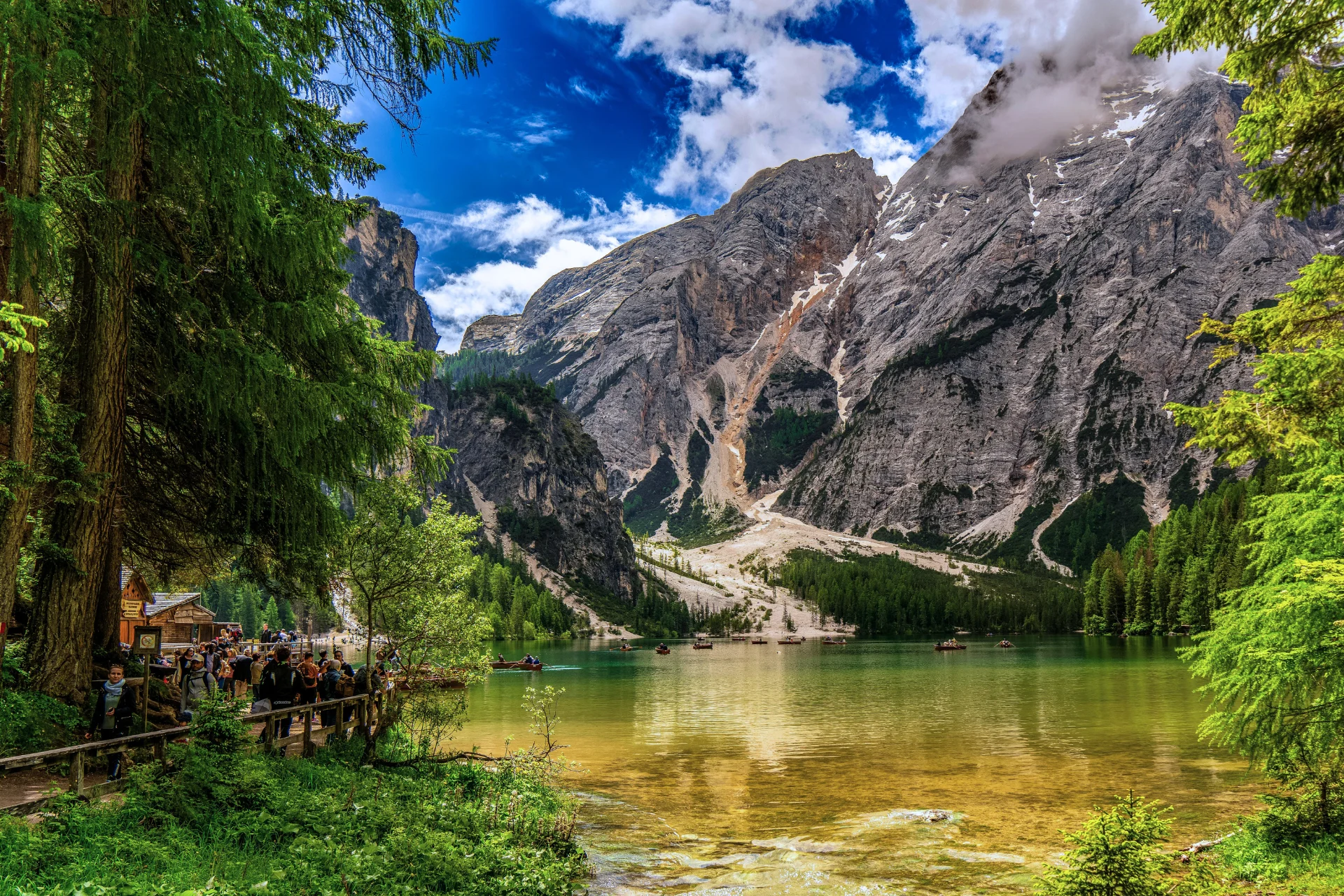
The Alta Via 1 is the benchmark Dolomites experience – a point-to-point traverse running from Lago di Braies in the north all the way down to Belluno. Nothing else in the region matches the cumulative satisfaction of a continuous trek where the scenery shifts day by day: lush meadows, then the Fanes limestone plateau, then the WWI tunnels carved into the flanks of Lagazuoi, then the cliff-perched Rifugio Nuvolau, then the massive walls of Monte Civetta as you push south.
Daily stages run five to eight hours on terrain that ranges from wide alpine tracks to rocky singletrack with occasional cable-protected sections. Navigation is generally clear in good conditions. What catches people out is sudden mountain fog – it can transform a well-marked trail into a genuine navigational challenge within minutes.
The main hurdle? Rifugio logistics. Huts along the AV1 fill up fast – I mean fast. Booking six to eight months ahead isn’t pessimism, it’s just reality for July and August. Sequencing availability into logical daily stages is the part that trips up most DIY self-guided hikers. Get it wrong, and your itinerary collapses.
⇒ Our complete Alta Via guide covers all you need to know.
Best for: Fit hikers who want a classic, structured multi-day adventure with authentic mountain hut culture. Check out the full guide to hiking in the Dolomites for context on where the AV1 fits within the broader Dolomites trail network.
Difficulty: E (Escursionismo) on the Italian Alpine Club scale, with sections of EE (Escursionismo Esperti) on exposed passes. Meaning, a standard mountain hiking trail with some sections requiring experience on exposed, steep terrain where a slip could be serious.


2. Val Gardena and Alpe di Siusi: High-Altitude Access Without the Approach
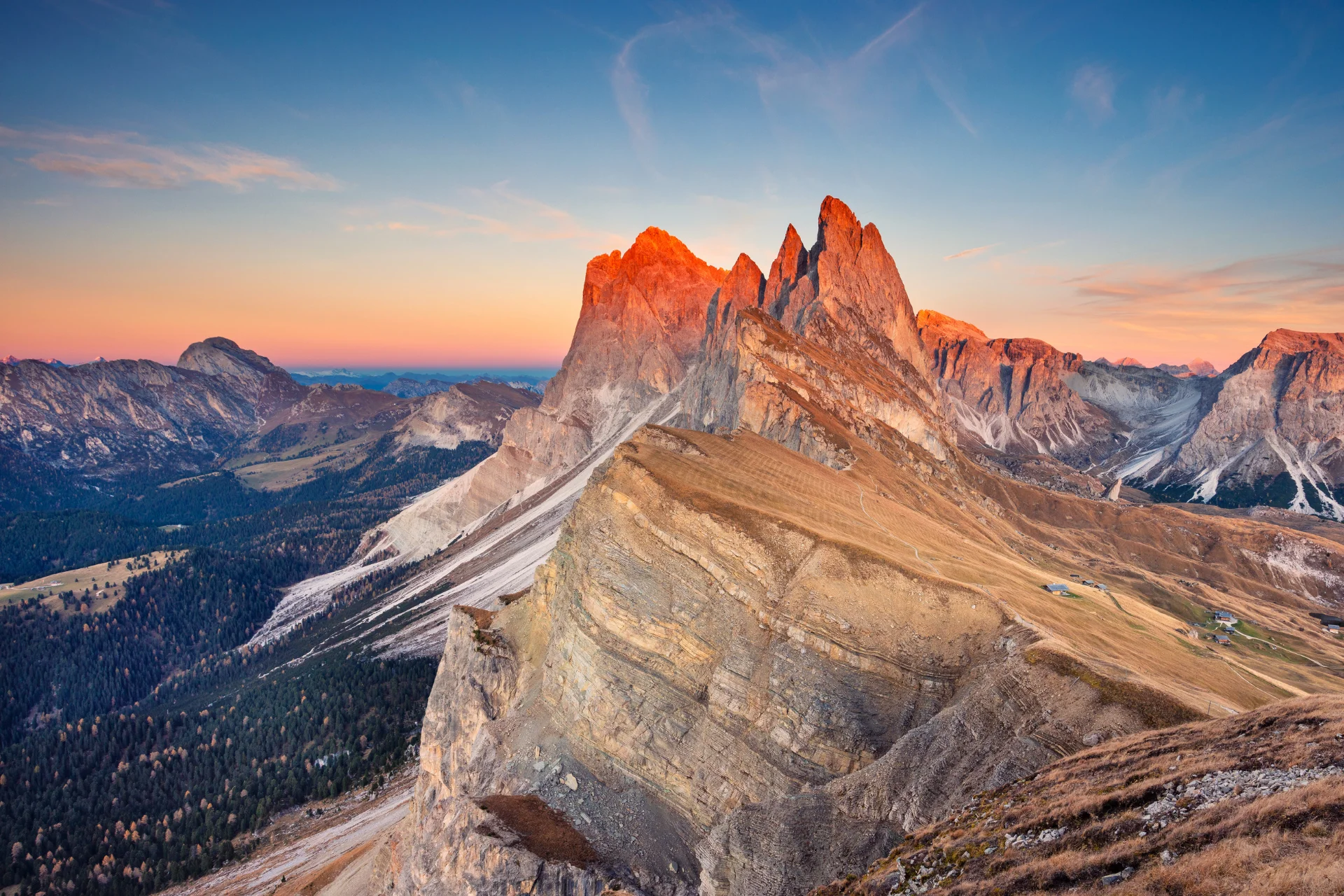
Val Gardena is the smartest pick for first-time visitors and families who want iconic scenery without committing to a multi-day approach. The lift infrastructure here is exceptional – you can reach the 2,500-meter Seceda ridgeline or the rolling Alpe di Siusi meadows in minutes rather than hours, skipping a gruelling ascent that would otherwise consume an entire day.
This region is well-suited to a “choose-your-own-adventure” format – the schedule, pace, and the route decisions are all yours: mix high-alpine ridge walks with stops at traditional malghe (mountain summer farms) for a plate of canederli (dumplings) and a glass of local wine. You can base yourself in a valley hotel and still access genuinely high mountain terrain every day.
Our Val Gardena self-guided trek deals with the logistics, pre-books all rifugio nights, provides itineraries, GPS tracks, and includes 24/7 support – you hike independently, we handle the rest!
VIEW Tour PAGEKey highlights:
- Seceda ridgeline for the jagged Geisler peaks backdrop
- Puez-Odle traverses for accessible high-altitude circuit hiking
- Alpe di Siusi, Europe’s largest alpine meadow, for gentler terrain
The critical timing issue: iconic viewpoints can get crowded by 10am in July and August. Lift schedules also dictate your trail access in ways that catch hikers off guard. Get up early, check the first gondola time the night before, and get moving by 7:30am.
Best for: First-timers, families, and mixed-ability groups who value flexibility, comfort, and food culture alongside their hiking.
3. Rosengarten and Catinaccio: The Alta Via Alternative
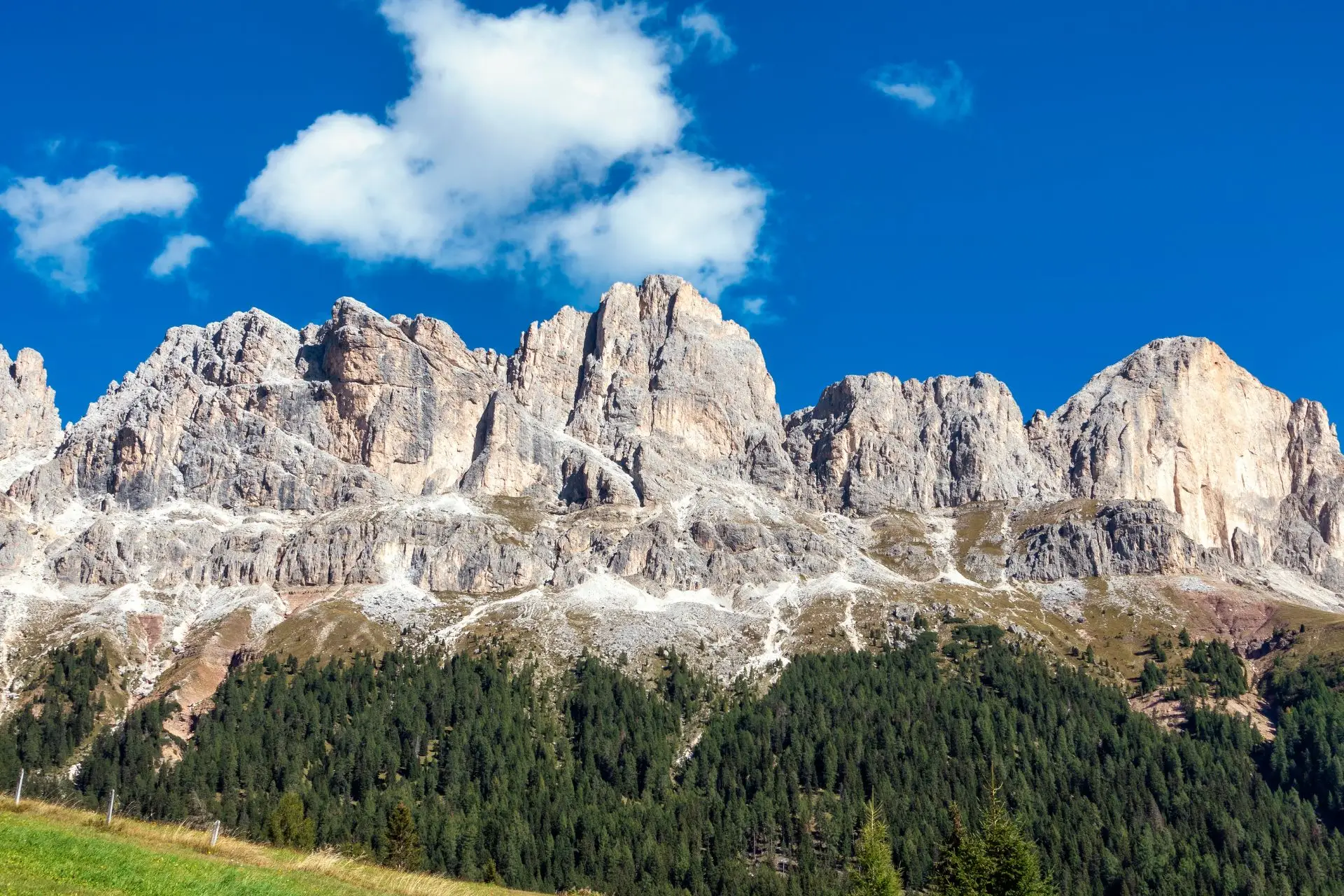
When AV1 rifugio slots are gone, and you’re not willing to settle for a lesser experience, the Rosengarten massif is your answer. This area – known in Italian as the Catinaccio – features the iconic Vajolet Towers and ridgelines that rival anything in the UNESCO-listed core zone. A four-to-seven-day circuit here allows for genuine rifugio hopping without the rigid logistics of a fixed north-to-south traverse.
By selecting route variants that avoid technical via ferrata sections, you can keep the entire circuit as hiking-only. Access points from Col Rodella or the valley floor are straightforward. The trade-off is that long linking days between passes involve significant ascent and descent with total weather exposure above the treeline.
For trekkers who want a committed multi-day experience with flexible loop options – and who don’t want to spend six months battling for AV1 availability – this is a genuinely excellent alternative. The rifugio culture here is outstanding, and the peak-season crowding is noticeably lighter than the main routes.
Best for: Experienced hikers who want rugged limestone terrain, loop flexibility, and traditional hut culture away from the high-traffic corridors.

4. Tre Cime di Lavaredo: The Three Peaks Circuit
Nothing quite prepares you for a “Parking Full” sign at 7:45am when you’ve driven two hours to get there. We’ve watched it happen many times, mainly in August, when we have stayed at Rifugio Auronzo. The hike itself is straightforward, a 10-kilometer circuit on non-technical paths with a small amount of elevation gain – but success requires a proper access strategy, not just good boots.
From Rifugio Auronzo (the road-accessible starting point), Trail 101 on the CAI network takes you around the three iconic peaks with the best views, arriving at Forcella Lavaredo and at Rifugio Locatelli (Drei Zinnen Hütte), where the north faces of the Tre Cime reflect in the small lake below. The side detour to the Cadini di Misurina viewpoint adds drama if your legs have more to give.

The circuit stays above the treeline, which means high-altitude UV exposure and rapid weather shifts that your clothing needs to handle. Check the forecast the night before and again in the morning.
If you only have a day or two, then the best possible version of this hike is to book a rifugio night at Rifugio Locatelli and catch the sunrise before any day-trippers arrive. It’s a completely different experience. Use the shuttle from Dobbiaco or reserve parking weeks in advance via the official booking system to avoid arriving at a closed gate.
Our guide to the Tre Cime di Lavaredo loop hike covers access logistics and route variations in full detail.
Best for: First-time visitors and photographers who commit to the early start. Unsuitable for those hoping to just show up mid-morning in peak season.
Want both Tre Cime and Lago di Sorapis without the logistics stress? Our Lake Sorapis & Tre Cime di Lavaredo 7-day hut-to-hut trek combines these iconic trails with pre-booked rifugio nights, detailed itineraries, and all logistics taken care of – you get the sunrise experience at Tre Cime without the crowds, plus the Cadini viewpoint extension.
VIEW Tour PAGE5. Lago di Sorapis: Turquoise Waters and Exposed Ledges
The color of Lago di Sorapis needs no filter. The glacial melt that feeds it produces a milky turquoise that looks digitally altered until you’re standing on the shore staring at it. Getting there is the honest part of the story.
This is a moderate-to-challenging day hike from the Passo Tre Croci area near Cortina. The trail involves narrow ledges with metal cables for handholds, limestone steps that can become dangerous when wet, and steep drops that will stress hikers who are sensitive to exposure. Sturdy boots with ankle support are not optional here.
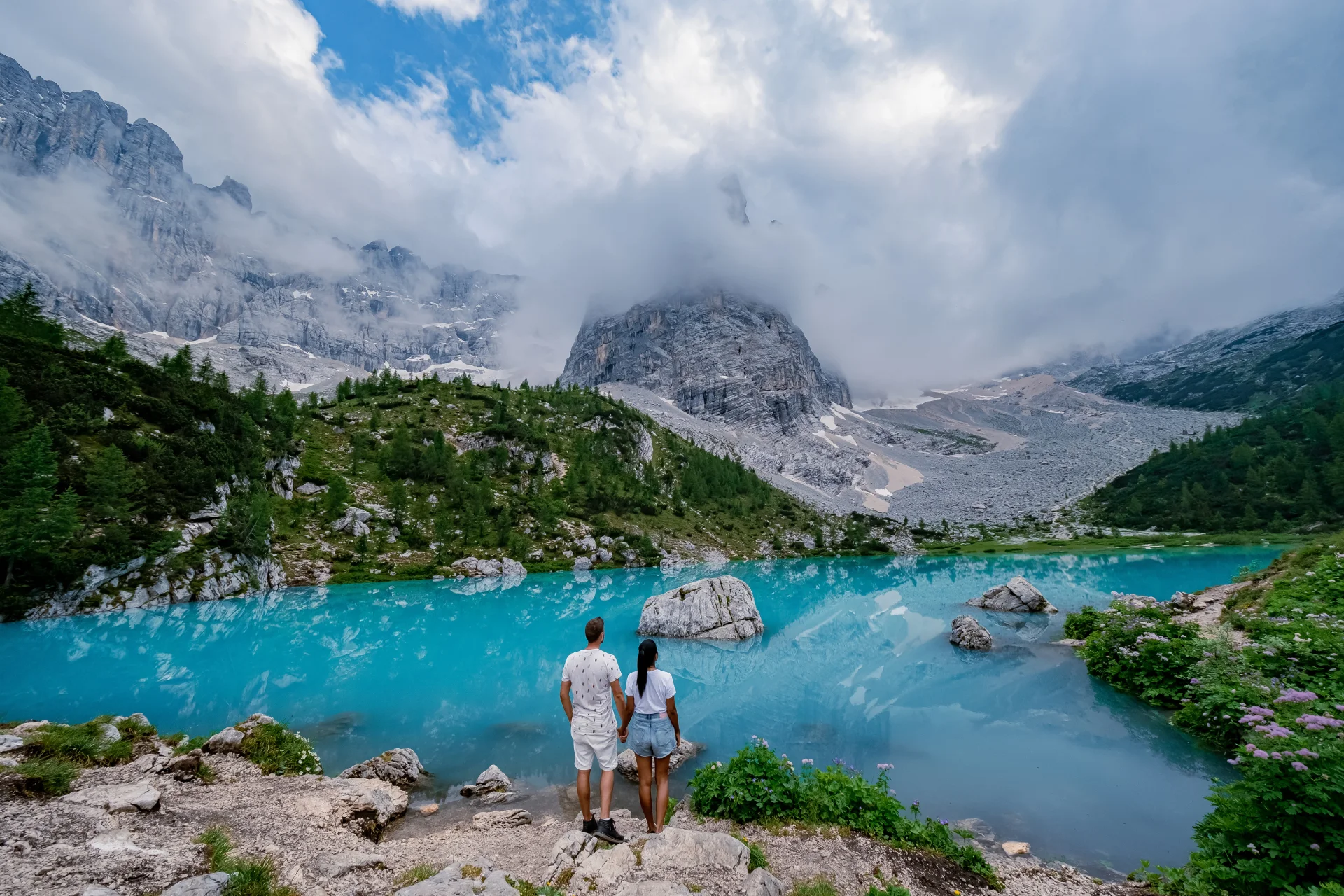
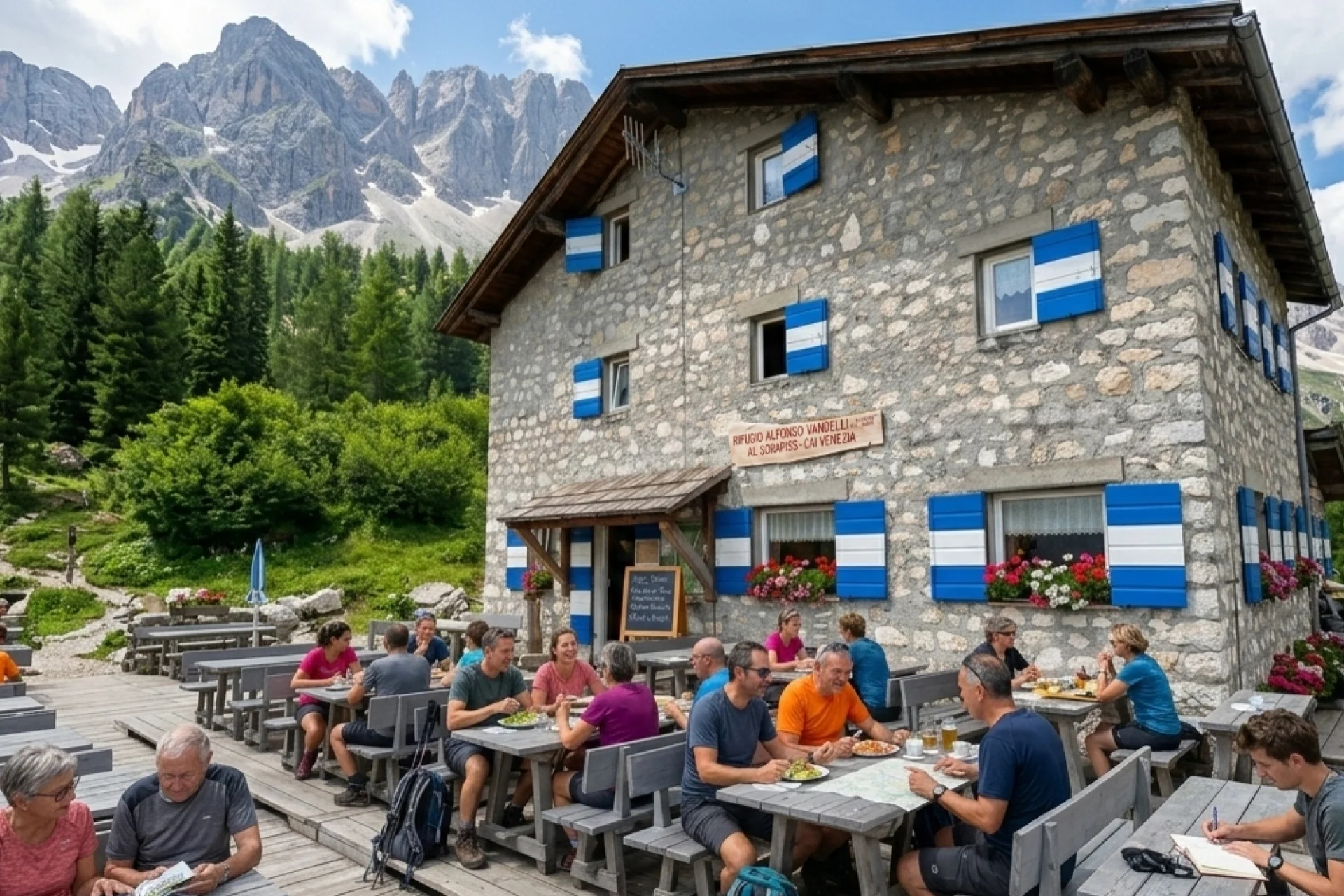
Our Advice: Crowds surge by mid-morning, and the bottlenecks happen on the exposed sections, which, for some, is an unpleasant place to queue. Get up early and leave at sunrise. Grab a coffee at Rifugio Vandelli when it opens – the hut sits above the lake basin, and the early morning light on the Dito di Dio (“God’s Finger”) peak above it is worth the alarm.
Best for: Hikers based near Cortina who are comfortable with some narrow, high-exposure sections and want an iconic destination reward for the effort. Can be done as a day trip, but best experienced by staying overnight at Rifugio Vandelli as part of a multi-day hike.
6. Dolomiti Brenta Trek: The Western Loop Away From the Crowds
When the Alta Via 1 huts are fully booked six months out, the Dolomiti Brenta Trek (DBT) is the answer you didn’t know existed. This circular route wraps around the Brenta massif – the only Dolomite group west of the Adige River – and delivers genuine wilderness without the AV1 booking chaos.
The DBT Expert route (approximately 89 kilometers) runs through Adamello Brenta Natural Park at an average elevation of 2,000 meters, connecting rifugi like Tuckett, Brentei, Pedrotti-Tosa, and XII Apostoli over six to ten days. A lower-elevation Country variant exists for less technical hiking, but the Expert loop is what most serious trekkers target. The terrain is distinct from the eastern ranges – reddish Dolomia rock towers, high cirques, and vertical walls (Cima Tosa at 3,173m) that feel truly remote. Trail marking follows the standard SAT system with white-red blazes and numbered paths.
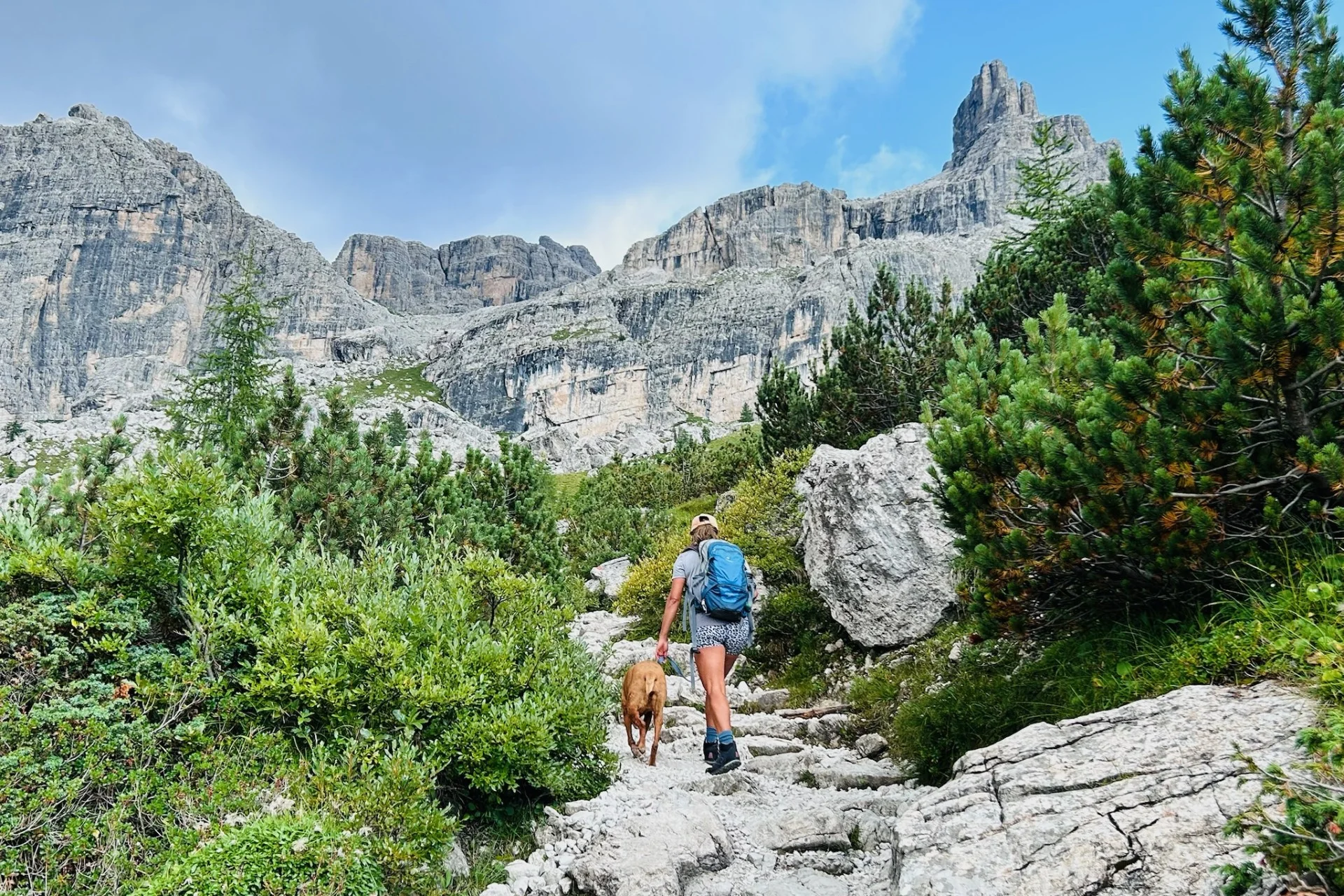
The critical difference from the AV1? Mixed accommodation density. The southern cluster (rifugi Tuckett, Brentei, Pedrotti) can be booked months ahead. The northern and western sections have staffed huts like Peller and Graffer, but they’re spaced much further apart – and some stages can even rely on unmanned bivouacs (Bivacco Bonvecchio) that operate first-come, first-served. Some sections involve sentiero attrezzato – aided paths with fixed cables on exposed ledges – which aren’t full via ferratas but require comfort with exposure.
The Via delle Bocchette isn’t a parallel route to the DBT – it’s the spine of the Brenta itself. While the standard DBT Expert often stays lower on scree slopes (Sentiero dell’Ideale and variants), you can tackle the Bocchette as a separate, higher-altitude technical project. This is a continuous horizontal traverse system running along the main ridge at 2,500-3,000m for multiple days. Dating back to 1932, it’s seriously exposed – iron ladders and cable sections with sustained drops beneath your boots. A helmet, harness, and via ferrata kit are required. Many take a guided tour, though hikers experienced in via ferrata can certainly do it independently.
A few pointers:
- Access from Madonna di Campiglio is straightforward via the Grostè cable car.
- Being a circular route means you return to your starting point.
- Early and late season conditions matter; always check conditions before heading out.
- Smaller glaciers like Vedretta degli Sfulmini have receded significantly over recent years and now resemble frozen scree fields. Microspikes or light crampons may still be necessary depending on the year.
Best for: Experienced hikers wanting a loop format with lighter crowds than the AV1, or via ferrata enthusiasts ready for multi-day ridge exposure. Not suitable for first-timers.
Difficulty: E to EE (Escursionismo to Escursionismo Esperti) on the Italian Alpine Club scale; EEA for the Bocchette via ferrata sections.
7. Cinque Torri and Lagazuoi: The WWI History Circuit
Most Dolomites hikes deliver scenery. This one delivers scenery and something to think about. The circuit at Passo Falzarego combines the iconic Cinque Torri rock towers with the haunting Great War history of Mount Lagazuoi, where Italian and Austro-Hungarian soldiers spent years fighting a vertical war on these ridges.
The terrain shifts from soft alpine meadows around the Cinque Torri to rugged war-era paths higher on the mountain. A cable car provides lift access to the Lagazuoi summit, which is useful for mixed fitness groups. From the top, the panoramas across the Ampezzo valley are among the most expansive in the region.
The standout feature is the optional descent through the WWI tunnel system – galleries carved directly into the limestone by soldiers. Bring a headlamp and expect uneven footing in the dark. It’s genuinely eerie and completely unlike anything else in the Dolomites.
The weather on these ridgelines can change quickly. Monitor conditions before departure and build in a bailout window if afternoon storms look likely.
Best for: Travelers wanting cultural and historical depth alongside their hiking. Excellent option for mixed fitness groups due to lift support.
8. Hotel-Based Hub Strategy: Basecamp Over Backpack
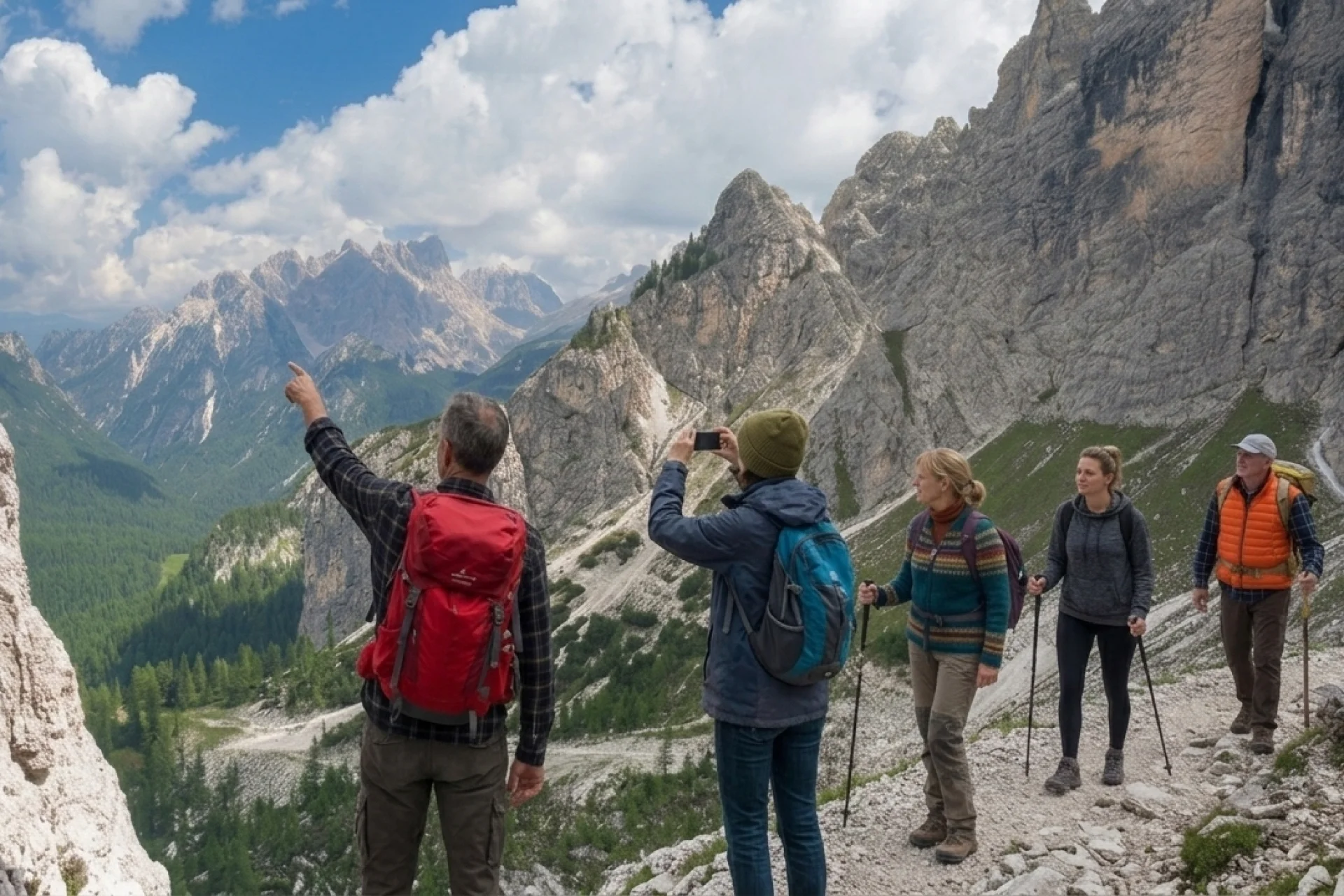
Let me push back on a common assumption: you don’t need to sleep in a dormitory to see the best of the Dolomites. Some of the most satisfying hiking weeks I know of are hotel-based – choosing a town like Cortina d’Ampezzo as a central hub and radiating out to different trailheads each day.
From Cortina, you can access most of the classic day circuits as standalone objectives:
- Tre Cime di Lavaredo loop
- Lago di Sorapis
- Cinque Torri and Lagazuoi history circuit
- Giau and Falzarego Passes
Recommended start times, parking workarounds, and rifugio lunch stops for each of these are laid out day-by-day in one place, if you want to plan the specifics before you commit to this strategy.
The tactical advantage here is weather flexibility. When a storm system moves over the high passes, you can swap a technical ridge walk for a lower meadow trail or a rest day in the valley. You maintain consistent sleep, private bathrooms, and evening meals in town.

The honest trade-off: transport choreography. You’ll need to coordinate local buses, shuttles, or taxis to reach trailheads each day. This takes planning and adds cost. You also lose the “journey” feel of a through-hike, the sense of moving continuously through the mountains rather than returning to the same bed.
A hybrid approach works well: base yourself in a hotel for most of the trip, then add one rifugio night mid-week for the mountain atmosphere and experience.
Best for: Hikers traveling with non-hikers, families, or anyone who prioritizes comfort and flexibility over immersion.
9. Splitting the Alta Via 1
If the 9 to 11 days of hiking sounds like too much, then the fix is simple: the Alta Via 1 is not all-or-nothing! 2 Shorter options allow you to experience this epic trail.
Split into two separate trips, the northern half covers Lago di Braies, the Fanes plateau, and the Lagazuoi tunnels – arguably the most iconic section. The southern half delivers the massive walls of Monte Civetta and quieter final massifs before the route drops toward Belluno. Both halves stand on their own as four-to-seven-day trips, with the added benefit of reduced fatigue and simpler weather contingency planning.
The logistics challenge is transport to and from midpoints, which can be unintuitive. You need to align your stage endpoints with local bus hubs – Passo Falzarego is the key connection point for the mid-route split. Build this research into your planning before you book any rifugio beds.
For a deeper look at how multi-day Dolomites trekking actually works – logistics, packing, rifugio realities – our backpacking guide covers the operational side in detail.
Best for: Hikers testing hut-to-hut life before a full traverse commitment, or experienced hikers who simply couldn’t secure a full AV1 sequence.
10. Short Hut-to-Hut Samplers: Three Days of the Real Thing
The long multi-day hut-to-hut hike commitment puts a lot of people off – and honestly, for someone new to multi-day mountain hiking, a ten-day traverse might not be the right first move. What I’ve found works better is a well-planned three-day sampler in hut-dense areas like Val Gardena or Alpe di Siusi. You get the full rifugio rhythm – communal dinner tables, alpine sunrises, mid-trail espresso stops at huts – without the physical and logistical demands of a long route.
Lifts bypass the grinding initial climbs, which lets you focus on moderate daily efforts along scenic ridgelines rather than spending your first morning just getting to altitude. That said, don’t underestimate these shorter trips. Beginners consistently misjudge how elevation affects their pace, and even a three-day circuit involves unpredictable mountain weather, daily route assessment, and some adjustment to dormitory life.
If you’re wondering whether shorter hut-to-hut formats are manageable for beginners, the beginner’s hiking guide gives an honest assessment.
For a concrete example of how to structure a three-day sampler, our 3-day hut-to-hut itinerary shows realistic daily stages, rifugio options, and pacing. This three-day trek through the Puez-Odle Nature Park offers a quintessential hut-to-hut experience, traversing high-alpine meadows, volcanic rock slabs, and dramatic ridgelines.
Best for: First-timers, mixed-ability friend groups, or anyone wanting a genuine test of hut life before committing to a longer traverse.
10. Self-Guided Itinerary Packages: Solving the Logistics Problem
Our hut-to-hut hiking packages handle rifugio sequencing and logistical coordination across several key routes and areas, including Alta Via 1 sections, Val di Fassa, and Lake Sorapis and Tre Cime tours. Worth looking at for a reliable, enhanced hiking experience, especially if the logistics are what’s holding you back from booking.
Here’s the thing nobody tells you before your first Dolomites trip: the hardest part isn’t the hiking. It’s the booking. Rifugio reservations open at different times with different systems, bus schedules change seasonally, and lift operating dates aren’t always published far in advance. Getting this wrong doesn’t just inconvenience you – it can unravel an entire week!
A self-guided itinerary package solves this without removing the independence. You get pre-planned daily stages with rifugio beds confirmed, offline GPS tracks, detailed route notes, and typically some form of phone support if something goes sideways. You still walk at your own pace, stop where you want, and make your own decisions on the mountain. You just don’t have to spend 40 hours doing pre-trip research before you can enjoy any of it.
View Posts By Topic
FAQ
Yes, provided you choose the right starting point. Val Gardena and Alpe di Siusi are the best options for beginners – good lift support, dense hut networks, and multiple exit points if a stage becomes too much. Start with a three-day sampler rather than a full traverse. The guide to hiking the Dolomites for beginners gives honest guidance on what “beginner-friendly” actually means in a mountain context.
Six to eight months for July and August on popular routes like the Alta Via 1. Seriously – mark the date in your calendar. The AV1 huts often fill by January for the following summer. On less-trafficked circuits like Rosengarten or Val di Fassa, you have a bit more flexibility, but try not to push past four months out and expect easy availability.
The red and white paint blazes and numbered CAI signposts are generally excellent. In clear conditions on well-traveled routes, most hikers can follow them comfortably. Never hike without a backup navigation system. Download offline GPS tracks and carry a Tabacco 1:25,000 map. Treating the paint markers as your primary navigation tool is fine on a clear day, but you don’t want that to be your only plan.
Two things consistently: the dormitory situation and the infrastructure gaps at remote huts. Dorm rooms in high-altitude rifugi can be noisy – bring earplugs and an eye mask. Many huts are cash-only, have limited charging outlets (one or two for the whole room), and have variable hot water. Pack a power bank, carry a buffer of euros, and start each stage early to beat the afternoon storms. Your Guide to Dolomite Rifugios covers hut-specific realities for the main traverse route.